Char & Ash Testing After a House Fire: Why It Matters
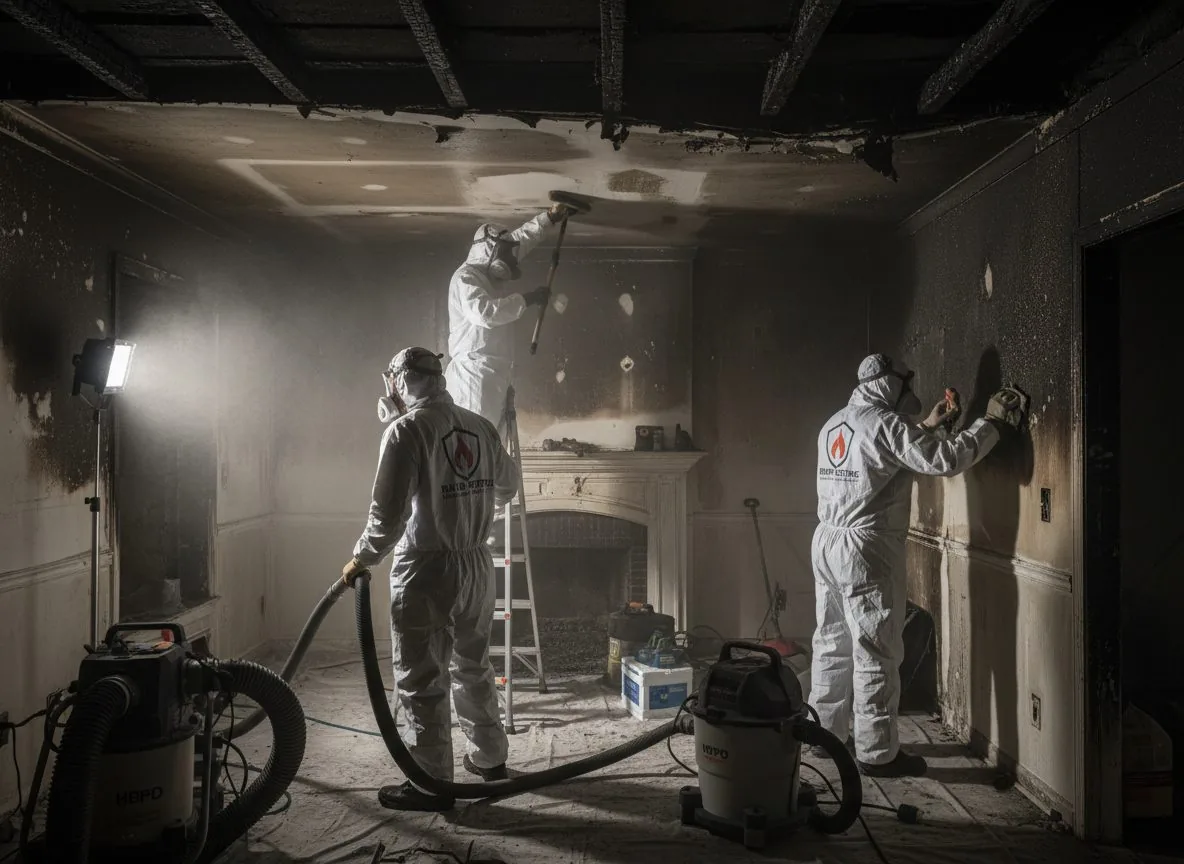
After a fire, the ash and char left behind can contain asbestos fibers, lead dust, heavy metals, and carcinogens that are invisible to the naked eye. Here's why testing must happen before anyone starts cleaning up.
⚠️ Do Not Touch Fire Ash
Never touch, sweep, or disturb fire ash without professional guidance. Keep children and pets away until testing is complete.
What's Hidden in Fire Ash
Asbestos Fibers
Pre-1980 homes contain asbestos in insulation, floor tiles, and ceiling texture. Fire releases these fibers into the ash — invisible and extremely dangerous.
Lead Dust
Pre-1978 homes contain lead paint. Heat vaporizes lead, which settles as fine dust throughout fire debris — a serious hazard for children.
Heavy Metals
Electronics, treated lumber, and batteries release arsenic, cadmium, and chromium when burned.
Carcinogenic PAHs
Polycyclic aromatic hydrocarbons are produced by incomplete combustion. Many are known carcinogens that persist in char and ash.
VOCs from Burned Plastics
Burned plastics and synthetic materials off-gas volatile organic compounds for weeks after the fire.
Mold from Firefighting Water
Water used to fight the fire creates ideal conditions for rapid mold growth within 24–48 hours.
Why Test Before Cleanup?
- Cleanup crews need to know what they're handling.
- Disturbing ash without testing spreads hazards.
- Insurance documentation. Many policies cover environmental testing.
- Legal protection. Testing shows you took reasonable precautions.
The Bottom Line
Fire ash requires professional testing before anyone touches it. Call 610-228-7440 after any fire event in SE PA.
Had a Fire? Call Now
24/7 Emergency Response
Related Services
Frequently Asked Questions
Testing must happen first so cleanup crews know what they are handling, because disturbing ash without testing spreads hazards. Testing also supports insurance documentation — many policies cover environmental testing as part of fire claims — and provides legal protection by showing you took reasonable precautions.
Fire ash is not just soot: it can contain asbestos fibers, lead dust, heavy metals such as arsenic, cadmium, and chromium from electronics, treated lumber, and batteries, carcinogenic PAHs, toxic VOCs from burned plastics, and mold from firefighting water, which can grow within 24–48 hours.
No. Never touch, sweep, or disturb fire ash without professional guidance, and keep children and pets away until testing is complete. Fire ash requires professional testing before anyone touches it.
Pre-1978 homes contain lead paint. Heat vaporizes lead, which settles as fine dust throughout fire debris — a serious hazard for children.
Dealing with water damage or mold?
Start with a free visual inspection. We’ll walk your property and give you honest, professional recommendations — no pressure, no guesswork.