
Why Does My Basement Smell Musty Every Summer? A Bucks County Homeowner's Guide

That musty basement smell that arrives every summer isn't just "an old basement thing" — it's moisture feeding microbial growth. Warm, humid summer air condenses on your basement's cool walls, floor, and pipes, and with limited airflow, damp spots stay damp for weeks. The musty odor is mold and mildew announcing themselves. Here's what's actually happening in your Bucks County home and what to do about it.
Why Summer Is the Trigger
In June through September, outdoor air in Bucks County regularly carries 70–90% humidity. Your basement, meanwhile, sits 10–20 degrees cooler than the air upstairs. When warm humid air reaches those cool concrete walls, water condenses out of the air — the same way a cold glass sweats on a July afternoon. That thin film of moisture is all mold needs to start growing on dust, drywall, wood shelving, and the cardboard boxes nearly every basement stores. Combine that with closed-up, poorly ventilated space, and you get the exact conditions where that musty smell thrives.
Why Bucks County Homes Are Especially Prone
We see this pattern from Doylestown to Newtown, Yardley to Quakertown. Many Bucks County homes have older stone or block foundations that are naturally more porous than modern poured concrete — they wick moisture inward. Add a high water table in low-lying areas, downspouts that discharge too close to the foundation, and sump pumps that haven't been serviced in years, and summer humidity finds an easy foothold. Finished basements hide it even better: mold grows quietly behind the drywall while the room above it looks and smells just fine.
What the Musty Smell Is Telling You
That odor comes from microbial volatile organic compounds (MVOCs) — gases released by actively growing mold colonies. In other words, the smell is the mold, not a warning that mold might show up someday. If the smell is strong when you open the basement door and fades as you go upstairs, the growth is down there. If it lingers in your living space too, the problem may be bigger than the basement. Indoor air quality testing can tell you exactly what's in the air and how far the problem reaches.
Practical Fixes That Actually Help
- Control humidity. A properly sized dehumidifier set to keep basement humidity below 50–55% prevents new growth. Empty it or plumb in a drain — a full, shut-off dehumidifier helps no one.
- Move water away from the foundation. Extend downspouts at least 6 feet out, and make sure soil slopes away from the house. This one fix resolves a surprising number of damp basements.
- Check your sump pump. Pour a bucket of water in the pit each spring and confirm it kicks on. A dead pump discovered in August is a flooded basement discovered in August.
- Improve airflow. Open basement windows on dry days, and don't seal everything up airtight with summer humidity pressing in.
- Clear out cardboard. Store belongings in plastic bins. Cardboard is mold food sitting in a damp room.
When the Smell Won't Go Away
If you've done the dehumidifier, the downspouts, and the airflow — and the musty smell still returns every summer — there's likely active mold you can't see. That's when professional mold testing earns its keep: air and surface sampling pinpoints what's growing and where, so you're not guessing. Our free visual inspection covers all of Bucks County, and our team includes an industrial hygienist — so the assessment you get is grounded in science, not sales pressure.
Frequently Asked Questions
Warm, humid summer air condenses on cool basement surfaces — walls, floors, and pipes — creating the damp conditions mold needs. Combined with limited airflow and stored organic materials like cardboard, this is why the musty smell reliably returns each summer, especially in older Bucks County homes.
Usually, yes. That musty odor comes from microbial volatile organic compounds (MVOCs) released by actively growing mold or mildew — often hidden inside walls, under flooring, or behind stored items. Professional mold testing can confirm it.
A properly sized dehumidifier set to keep humidity below 50-55% helps prevent new growth, but it won't remove mold that's already established. If the smell persists with the dehumidifier running, there's likely active mold that needs professional attention.
It's common, but 'common' isn't the same as 'fine.' Stone and block foundations in older homes are more porous, and many lack modern drainage — but persistent mustiness still signals moisture and microbial growth that should be investigated.
Musty basement back again this summer?
Get a free visual inspection. We'll find the moisture source and give you honest, professional recommendations — serving Bucks County and all of Southeastern PA, 24/7.
Keep reading
 Mold
Mold
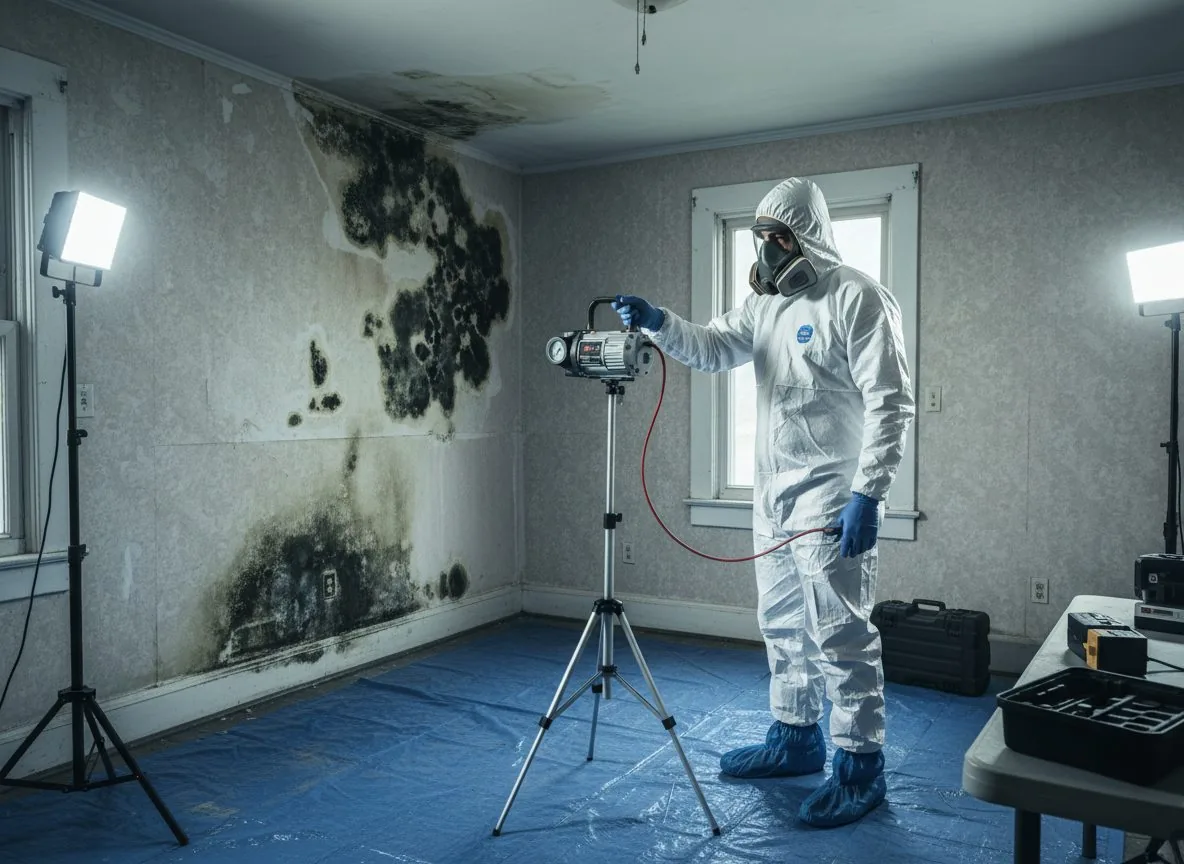
7 Warning Signs You Have Mold in Your Home
Mold doesn't always show itself. Learn the 7 hidden warning signs — musty odors, health symptoms, water stains — and what to do if you spot them.
Read the guide →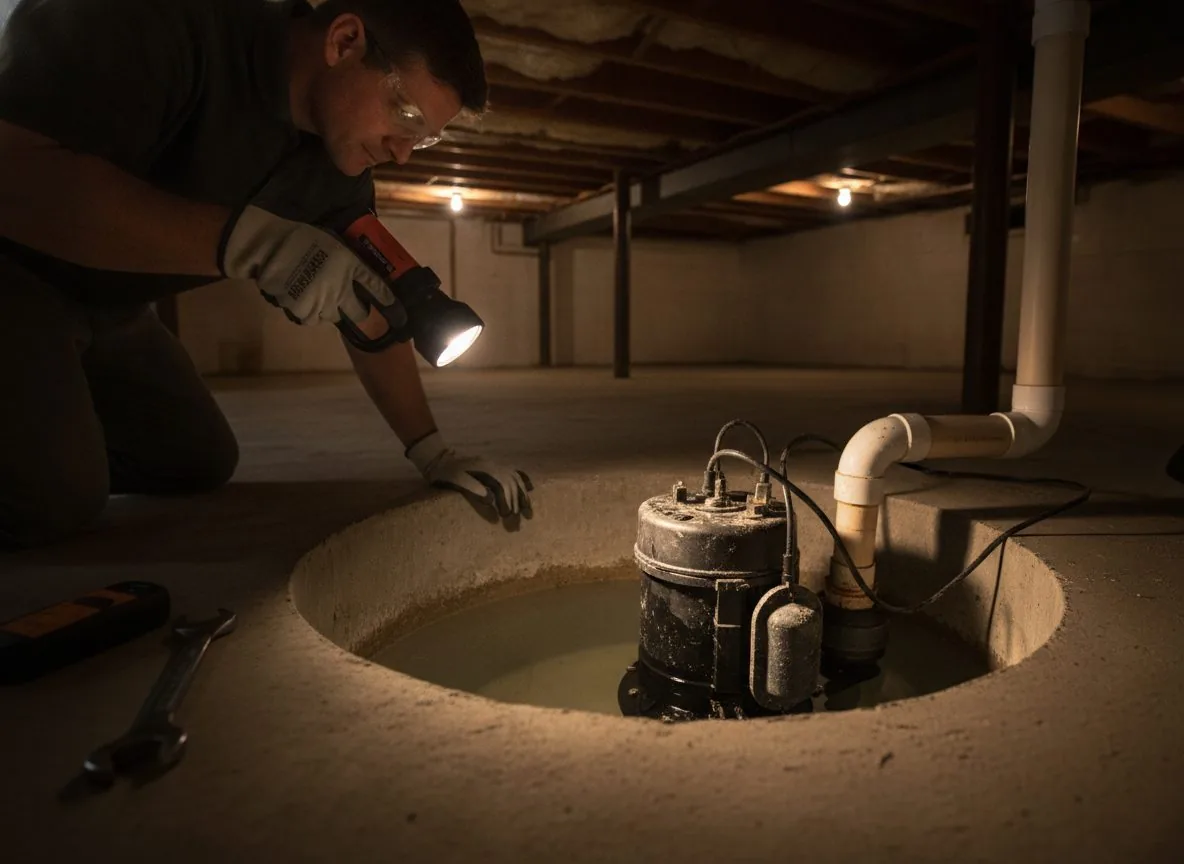 Water Damage
Sump Pump Failure: 9 Warning Signs (And What to Do Next)
Sump pump failure is one of the most common causes of basement flooding in SE Pennsylvania. Know the 9 warning signs before it fails.
Read the guide →