
Pipe Burst in Your Home? What to Do in the First Hour
Quick Answer
What should you do first when a pipe bursts?
Shut off the main water valve first, then turn off power to any area where water is near electricity — only if you can do so safely without standing in water. Move valuables out of the water, take photos and video for insurance, and call for professional water extraction and drying right away. Mold can start within 24 to 48 hours, so the first hour and the first day decide how big the job becomes.
Water is pouring through a ceiling, pooling across the floor, and every second it gets worse. A burst pipe is one of the most common winter and cold-snap emergencies we see in Southeastern Pennsylvania — and also one of the most survivable for your home if the first hour goes right. You do not need to fix the pipe yourself. You need to stop the water, stay safe, and protect what can still be saved. Here is the order that matters.
Your First-Hour Checklist, in Order
- 1. Shut off the water. Turn off the main shut-off valve where the water line enters the house, or the closest valve to the burst. This single step limits almost everything that follows.
- 2. Make the area electrically safe. If water is near outlets or appliances, shut off power to that area at the breaker — only if you can reach it dry. Never wade into standing water near electricity.
- 3. Get people and pets clear. Keep kids and pets out of flooded rooms, especially if a ceiling is bulging or sagging — that is water weight waiting to come down.
- 4. Rescue what water has not reached yet. Move dry furniture, rugs, electronics, photos, and documents to a dry room. Put foil or blocks under furniture legs that must stay.
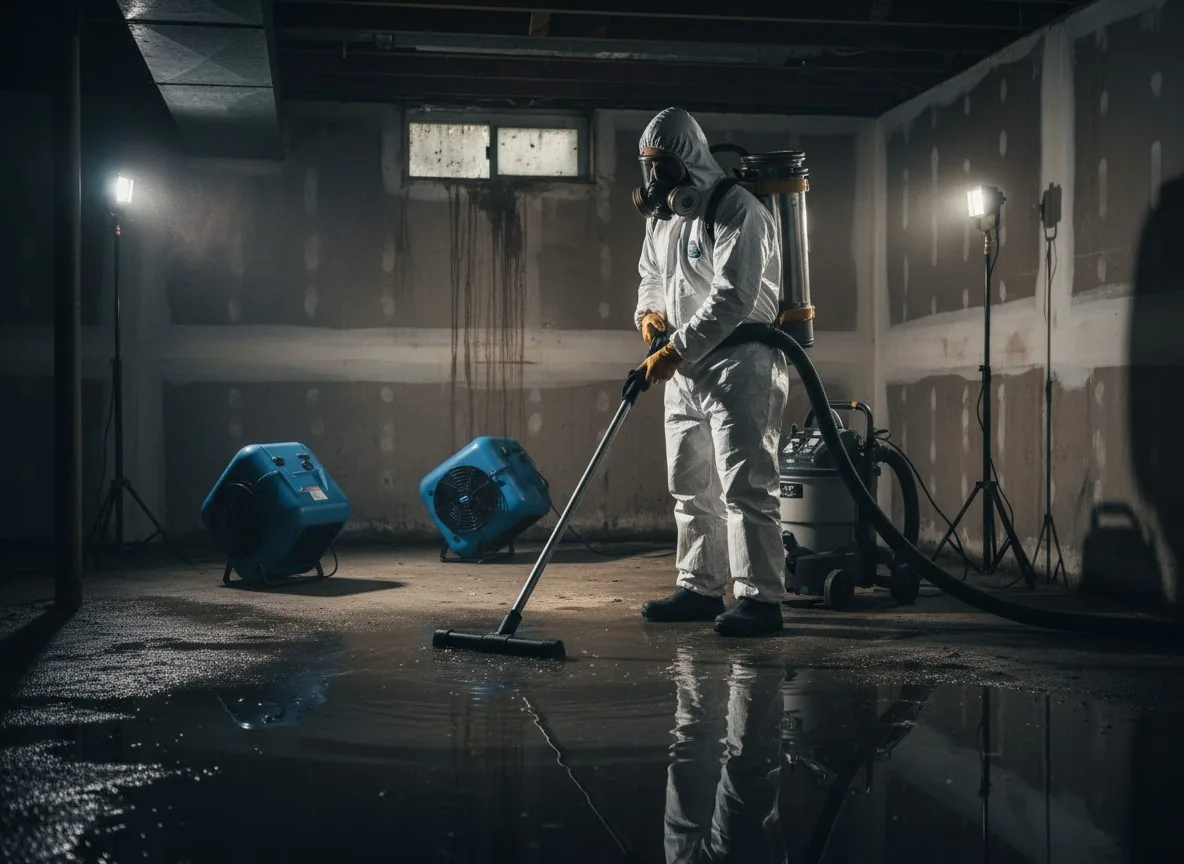
- 5. Start removing water you can reach. Towels, a mop, and a wet vacuum on shallow water help, but do not delay calling for extraction on deeper water — see what professional water and flood extraction covers.
- 6. Document everything. Photograph and video the burst pipe, every affected room, and damaged belongings before cleanup. Insurers want to see the sudden damage as it happened.
- 7. Call for drying help the same day. Water hides in wall cavities, under flooring, and in insulation. Thorough drying in the first day is what prevents the follow-on problem in our guide to how long mold takes to grow after water damage.
Safety Do's and Don'ts
- Do learn where your main shut-off valve is today, while nothing is leaking, and make sure it turns freely.
- Do open cabinet doors under sinks and let faucets drip during deep cold snaps — prevention basics from our guide to preventing frozen pipes in Pennsylvania.
- Don't assume a room is dry because the surface feels dry. Baseboards, subfloor, and insulation can stay wet for days.
- Don't throw away damaged items before your insurer documents them, and don't wait days to report a claim — our water damage insurance claim tips walk through the paperwork.
- Don't use a regular household vacuum on standing water, and never enter a room with a sagging, water-loaded ceiling.
Frequently Asked Questions
Shut off the water. Find your main shut-off valve — usually where the water line enters the house, in the basement, utility room, or near the water meter — and turn it off. If you cannot find the main valve, turn off the valve closest to the burst pipe. Every minute the water keeps running adds damage, so shutting it off comes before mopping, moving furniture, or calling anyone.
If water is near outlets, appliances, or your electrical panel, turn off power to the affected area at the breaker box — but only if you can reach the box without standing in water. Never step into standing water to reach a breaker or unplug something. If you are not sure it is safe, stay out of the area and wait for help.
Look where the main water line enters your home, most often in the basement on the wall facing the street, near the water heater or furnace, or beside the water meter. In many Southeastern Pennsylvania homes it is a round wheel valve or a lever. Find it on a calm day, make sure it turns, and tell everyone in the house where it is — finding it for the first time during a flood is the hard way.
In many cases, homeowners insurance covers the sudden water damage from a burst pipe, though it may not cover the cost of repairing the pipe itself, and damage from slow, long-term leaks is commonly treated differently. Document everything with photos and video before cleanup, keep receipts, and call your insurer promptly. We work with insurance companies and can help document the damage for your claim.
Mold can begin growing within 24 to 48 hours on wet drywall, carpet, and wood, which is why the first day matters so much. Removing standing water quickly and thoroughly drying walls, floors, and hidden cavities — not just the surfaces you can see — is what keeps a burst pipe from turning into a mold problem a week later.
Dealing with a burst pipe right now?
My Water Damage Hero is a local, family-owned company based in Pottstown, PA. We offer free visual inspections, work with insurance companies, have an industrial hygienist on staff, and respond 24/7 across Montgomery, Chester, Delaware, Bucks, Berks, Philadelphia, Lehigh, Lancaster & Monroe County, PA.
Keep reading
 Water Damage
How to Prevent Frozen Pipes Before Winter Hits in Pennsylvania
Prevent frozen and burst pipes in Pennsylvania this winter with a simple fall prep checklist and warning signs.
Read the guide → Water Damage
What to Do After a Basement Flood
A flooded basement is overwhelming. Here is what to do first to protect your home and your family.
Read the guide →