
Sewage Backup in Your Basement? Here's What to Do First
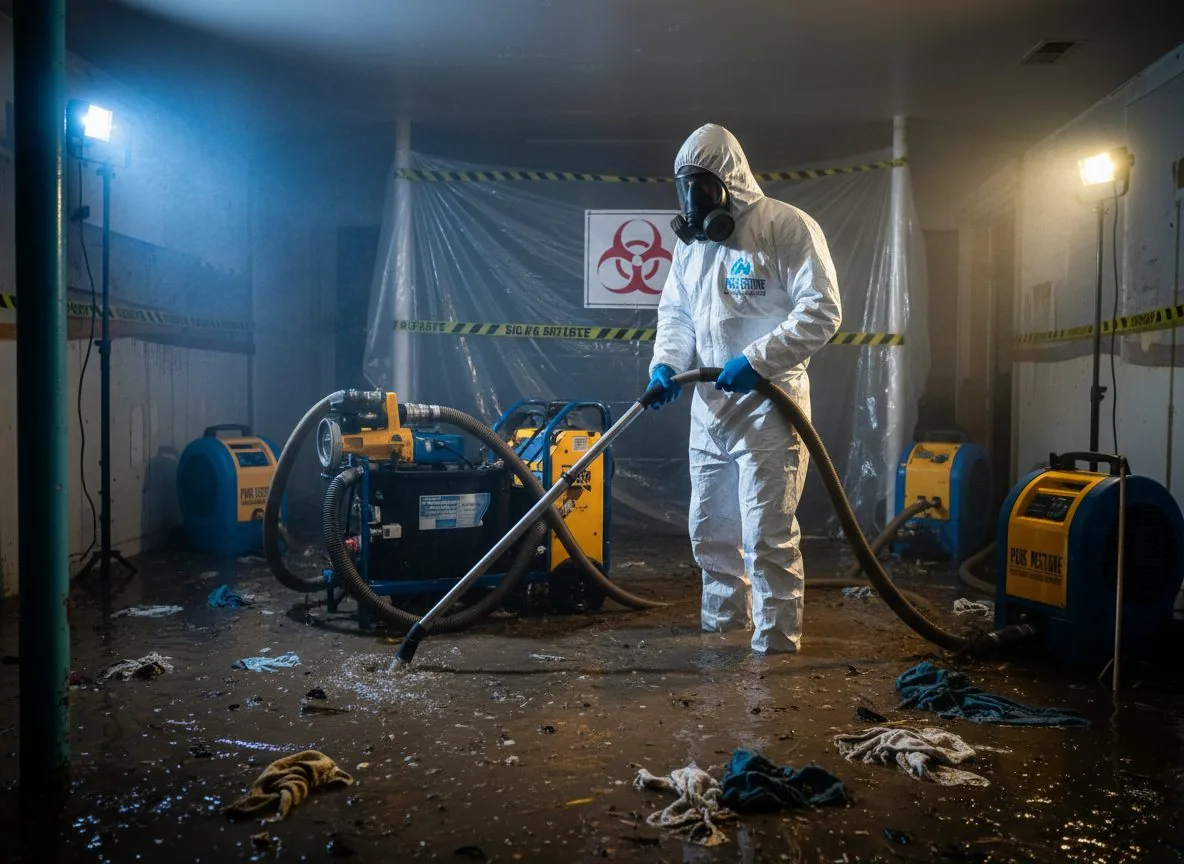
If sewage is backing up into your basement, treat it as an emergency: stay out of the water, keep everyone away, stop using your drains, and call for 24/7 professional help. Raw sewage is a biohazard — not a mess you mop up. The first hour matters more than you think, because every minute sewage sits, contamination spreads deeper into your floors, walls, and belongings. Here's exactly what to do, step by step.
First: Understand What You're Dealing With
Sewage water — what the industry calls Category 3 or "black water" — carries bacteria, viruses, and parasites that can make people seriously ill through skin contact or even breathing the air nearby. It doesn't matter whether it came from a municipal sewer backup, a failed septic system, or a clogged main line: once wastewater is on your basement floor, everything it touches is contaminated. That's why the single most important first step is also the simplest — don't go in it.
What to Do First, Step by Step
- Stay out of the water. Don't wade in to "check how bad it is" or grab belongings. Keep children and pets completely away from the basement.
- Stop adding water to the system. Don't run sinks, flush toilets, run the dishwasher, or do laundry — anything that drains into the sewer line can make the backup worse.
- Shut off basement power if you can do it safely. If your electrical panel is reachable without walking through water, turn off the basement circuits. Never step in standing water to reach it.
- Call for 24/7 professional sewage cleanup. This is not a wait-until-morning situation. Our team responds around the clock across Southeastern PA — call (610) 228-7440 and we'll talk you through the immediate steps while help is on the way.
- Take photos from a safe distance. If you can photograph the damage without entering the water, those photos help with your insurance claim. We work with insurance companies regularly and can guide you on documentation.
What NOT to Do
Panic leads to mistakes, so it's worth being explicit. Don't try to clean it up yourself with a mop and bleach — household cleaners can't fully disinfect porous materials like drywall, carpet, and insulation, which often must be removed entirely. Don't run fans or open basement windows to "air it out" — that spreads contaminated air through the house. Don't pour chemical drain cleaners down the line; they won't fix a backup and can create dangerous fumes. And don't assume a small backup is a small problem — what looks like an inch of water on the floor has already wicked up into your walls.
Why Professional Cleanup Matters
Proper sewage cleanup is a multi-step process: extracting the contaminated water, removing unsalvageable materials, disinfecting every affected surface, drying the structure completely, and verifying it's safe. Our technicians are licensed and insured, and our team includes an industrial hygienist — so the assessment of what's contaminated and what can stay is grounded in science, not guesswork. We serve Montgomery County and all nine counties across Southeastern PA, day and night.
After the Immediate Crisis
Once the backup is cleaned up, it's worth asking why it happened. Tree roots in older sewer lines, combined municipal systems overwhelmed by heavy rain, and aging clay or cast-iron pipes are the usual culprits in our area. A plumber can camera-inspect your line to find the cause — and if heavy storms are becoming a pattern, a backwater valve can prevent the next backup from ever reaching your basement. If you went through this once, you don't want to go through it twice.
Frequently Asked Questions
Yes. Raw sewage carries bacteria, viruses, and parasites that can cause serious illness through skin contact or inhalation. It should be treated as a biohazard — stay out of the affected area and let trained professionals handle the cleanup.
We don't recommend it. Even a small backup contaminates porous materials like drywall, carpet, and insulation that must be removed, and household cleaners can't fully disinfect what sewage touches. Professional sewage cleanup includes proper removal, disinfection, and drying.
Stay out of the water, keep kids and pets away, avoid using sinks, toilets, or appliances that drain into the sewer line, and call for 24/7 professional help. If you can safely reach your electrical panel without walking through water, shut off power to the basement.
As fast as possible. The longer sewage sits, the deeper contamination spreads into building materials and the greater the health risk. Call a 24/7 sewage cleanup team right away — waiting until morning can turn a contained backup into a much bigger remediation.
Sewage backing up right now?
Don't wait — call our 24/7 emergency line. We'll dispatch a trained sewage cleanup crew and walk you through keeping your family safe until we arrive. Free visual inspections, serving all of Southeastern PA.
Keep reading
Sewage
Signs You Have a Sewage Backup (Don't Ignore These)
Sewage backups are dangerous biohazards. Learn the 7 warning signs of a sewage backup in your home — and what to do immediately to protect your family in SE PA.
Read the guide → Water Damage
What to Do After a Basement Flood
Basement flooded? Here's your step-by-step action plan for the first 24 hours — safety first, then documentation, then professional help.
Read the guide →