
Sump Pump Failure: 9 Warning Signs
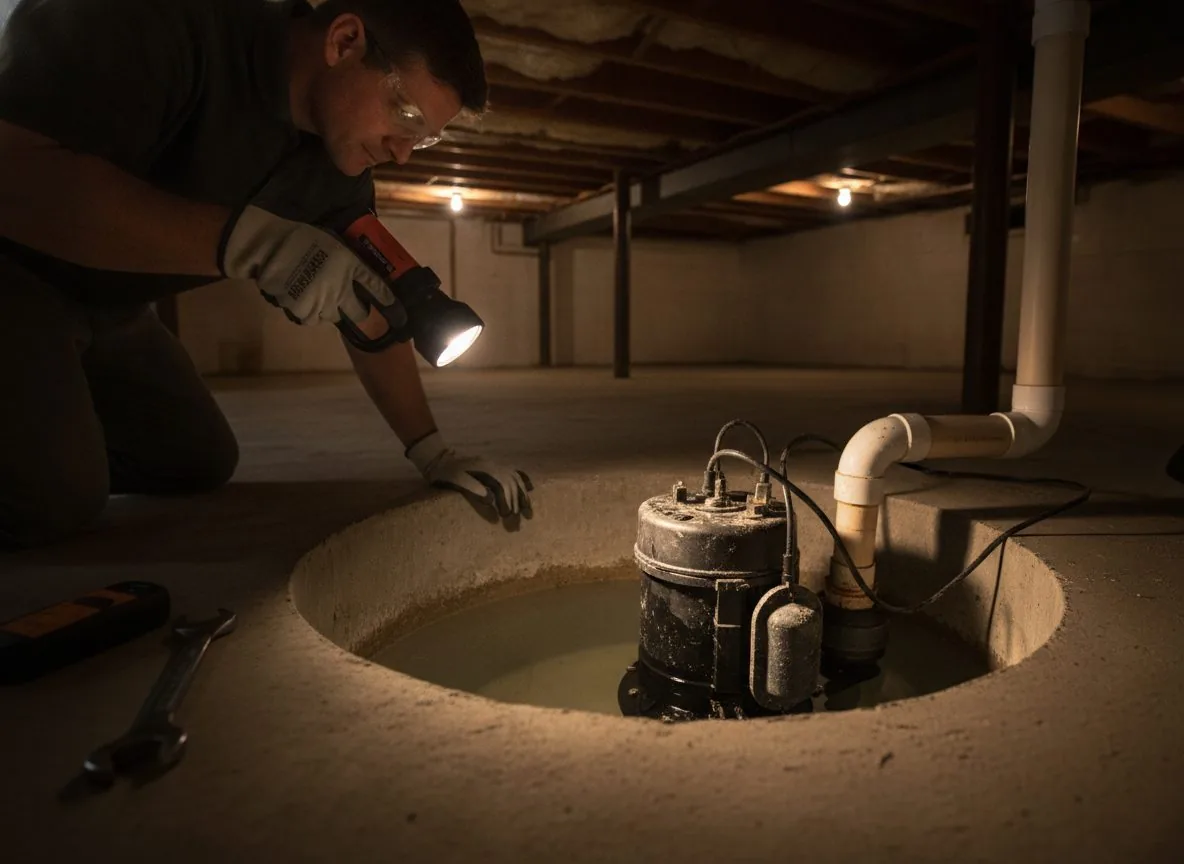
In Southeastern PA, sump pump failures are one of the most common reasons basements flood — especially during heavy rain, snowmelt, and power outages. Catching the warning signs early can save you thousands in cleanup and prevent mold growth.
9 Warning Signs Your Sump Pump Is About to Fail
It runs constantly (even when it hasn’t rained)
A sump pump that cycles nonstop may have a stuck float switch, an undersized pump, or a discharge line problem. Constant running overheats the motor and shortens the pump’s life.
It won’t turn on (or it only turns on sometimes)
Intermittent operation is a major red flag. It can be caused by a failing float switch, wiring issues, or a worn-out motor. If it’s not reliable, it’s not protecting your basement.
Strange noises: grinding, rattling, or loud humming
Unusual sounds often point to worn bearings, debris in the impeller, or a motor struggling under load. A loud hum with no pumping can mean the impeller is jammed.
Visible rust, corrosion, or mineral buildup
Rust and buildup can interfere with moving parts and sensors. It’s also a sign the pump has been exposed to moisture for years and may be near end-of-life.
The float switch gets stuck
The float is what tells the pump when to turn on. If it sticks against the basin wall or gets tangled, the pump won’t activate when water rises.
The discharge line is frozen or blocked
In winter, frozen discharge lines are a common cause of failure. If water can’t exit, it backs up and the pump can burn out. Blockages from debris or improper slope can cause the same problem.
You smell musty odors near the sump pit
Musty odors can indicate chronic moisture, hidden mold growth, or stagnant water in the pit. Even without a flood, this can impact indoor air quality.
It’s more than 7–10 years old
Many sump pumps last 7–10 years depending on usage and maintenance. If yours is older, replacement is often cheaper than dealing with a flooded basement.
No battery backup (or the backup hasn’t been tested)
Storms often knock out power — exactly when you need your sump pump most. A battery backup (tested regularly) is one of the best ways to prevent a flood.
What to Do If You Suspect Failure
- Don't wait for the next storm. If the pump is acting up, schedule an inspection or replacement now.
- Test it. Pour a bucket of water into the pit and confirm it turns on, pumps out, and shuts off correctly.
- Check the discharge line. Make sure it's not frozen, blocked, or draining too close to the foundation.
- Consider a battery backup. Power outages + heavy rain is the worst-case combo.
Flooded Basement? Act Fast
If your basement floods, water can soak into drywall, insulation, and flooring — and mold can start growing within 24–48 hours. The faster extraction and drying begins, the less damage (and cost) you'll face.
Call 610-228-7440 for 24/7 emergency response.
The Bottom Line
Sump pump failure is predictable more often than people think. If you're seeing warning signs, address it now — before water damage turns into a full restoration project.
Basement Flooding Emergency
24/7 Response Across SE PA
More Water Damage Guides
Frequently Asked Questions
It runs constantly without stopping, it will not turn on (or only turns on sometimes), grinding or rattling noises, visible rust or corrosion, a stuck float switch, a frozen or blocked discharge line, musty odors near the sump pit, an age of more than 7–10 years, or no battery backup.
Many sump pumps last 7–10 years depending on usage and maintenance. If yours is older, replacement is often cheaper than dealing with a flooded basement.
Pour a bucket of water into the pit and confirm it turns on, pumps out, and shuts off correctly. Also check that the discharge line is not frozen, blocked, or draining too close to the foundation.
Storms often knock out power — exactly when you need your sump pump most. A battery backup that is tested regularly is one of the best ways to prevent a flood.
A failed sump pump during a storm can flood your entire basement within hours. Water soaks into drywall, insulation, and flooring — and mold can start growing within 24–48 hours. Call 610-228-7440 for 24/7 emergency response across SE PA.
Dealing with water damage or mold?
Start with a free visual inspection. We’ll walk your property and give you honest, professional recommendations — no pressure, no guesswork.