
Water Heater Leaking? What to Do Before It Floods the Basement
Quick Answer
What should you do first when your water heater leaks?
Turn off the cold-water valve at the top of the heater (or the main shut-off if you cannot find it), then turn off its breaker or gas supply — only if you can do so without standing in water. Move stored items out of the spread, take photos for insurance, and call for professional water extraction and drying the same day. Wet drywall and flooring can grow mold within 24 to 48 hours.
A puddle around the water heater is never just a puddle. Water heaters hold dozens of gallons and keep refilling as they leak, so a small drip in the morning can be a flooded basement, ruined storage, and soaked drywall by evening — a pattern we see across Southeastern Pennsylvania basements, garages, and utility closets every heating season. You do not need to replace the heater yourself. You need to stop the water, stay safe, and dry what got wet. Here is the order that matters.
Your Water Heater Leak Checklist, in Order
- 1. Shut off the water to the heater. Turn the cold-water shut-off valve on the pipe entering the top of the tank. If it is stuck or missing, use the main shut-off where the water line enters the house.
- 2. Turn off the power or gas. Flip the breaker for an electric unit, or set a gas unit's dial to pilot — only from dry ground. Never stand in water to reach a breaker.
- 3. Keep people and pets clear. Hot water, electrical equipment, and a weakened tank are a bad mix. Keep the area clear until the water is off and the floor is drying.
- 4. Rescue what is stored nearby. Basements collect boxes, photos, and seasonal items right where heater water spreads. Move anything dry to a dry room; set wet cardboard aside — it rarely survives and holds moisture against the floor.
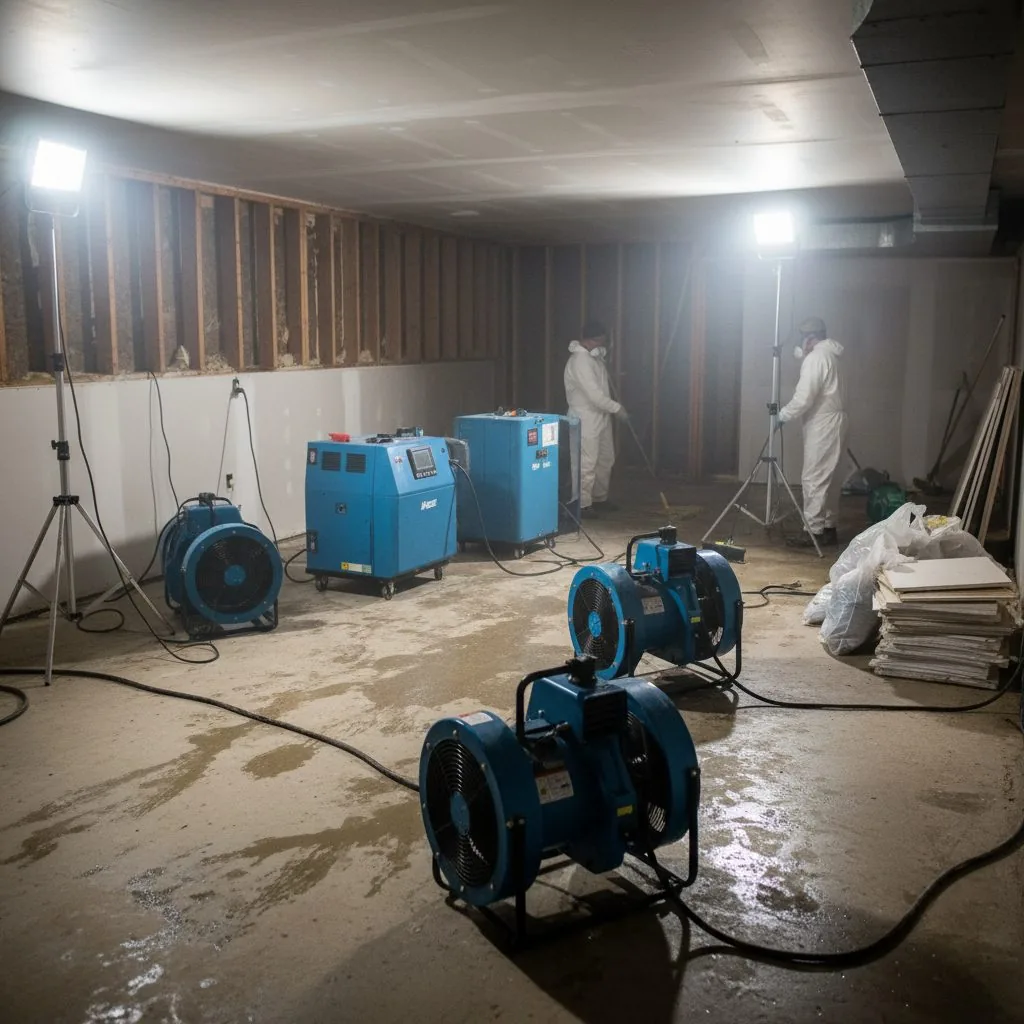
- 5. Contain and remove standing water. Towels can dam a slow spread toward a floor drain. For deeper water, professional water and flood extraction removes it faster and starts the drying clock sooner.
- 6. Document everything. Photograph the heater (including any label), the leak point, the water line, and every affected room and item before cleanup, for your insurer.
- 7. Get the space thoroughly dried. Water wicks into baseboards, drywall, and subflooring long after the surface looks dry — the same hidden-spread problem in our guide to hidden water leak signs.
Safety Do's and Don'ts
- Do check around your water heater monthly — rust streaks, damp flooring, and a hissing or dripping sound are early warnings worth acting on.
- Do know where both the heater shut-off and the main shut-off are before you ever need them, and make sure the valves turn.
- Don't ignore a leak because it looks slow. A tank that leaks from its body will not heal, and the water damage grows every day it runs — compare it with the first-hour priorities in our burst pipe guide.
- Don't throw away damaged belongings before your insurer documents them, and don't delay reporting — our water damage insurance claim tips cover the paperwork.
- Don't assume the room is dry because the puddle is gone. Check baseboards and adjacent rooms; moisture hides behind and under them.
Frequently Asked Questions
Shut off the water supply to the heater — look for the cold-water shut-off valve on the pipe entering the top of the tank and turn it off. If that valve is stuck or you cannot find it, shut off the main water valve for the house. Stopping the water first is what keeps a slow leak from becoming a flooded basement.
Yes, once the water is off, turn off the energy source too — switch off the breaker for an electric heater, or turn the gas control dial to pilot for a gas heater — but only if you can do so without standing in water. Never step into standing water to reach a breaker or appliance. If the area is flooded and you are not sure it is safe, stay clear and wait for help.
If you shut off only the valve at the heater, the rest of your home's cold water usually still works, though hot water will run out. If you had to shut off the main valve, all water is off until the heater is repaired or replaced. Either way, do not keep refilling and running a leaking tank — a tank that leaks from the body itself generally needs replacement, not a patch.
In many cases, homeowners insurance covers sudden water damage to floors, walls, and belongings from a failed water heater, though it may not cover replacing the heater itself, and damage from a slow leak that went unnoticed for a long time is commonly treated differently. Photograph the heater, the water line, and every affected room before cleanup, keep receipts, and notify your insurer promptly. We work with insurance companies and can help document the damage.
Mold can begin growing within 24 to 48 hours on wet drywall, carpet, flooring, and the contents stored around a basement water heater. Thorough drying of walls, floors, and hidden areas in the first day — not just mopping the visible puddle — is what keeps a heater leak from becoming a mold problem in the weeks that follow.
Dealing with a leaking water heater right now?
My Water Damage Hero is a local, family-owned company based in Pottstown, PA. We offer free visual inspections, work with insurance companies, have an industrial hygienist on staff, and respond 24/7 across Montgomery, Chester, Delaware, Bucks, Berks, Philadelphia, Lehigh, Lancaster & Monroe County, PA.
Keep reading
 Water Damage
Water Heater Leaking? What to Do Before It Floods the Basement
A burst pipe can flood a room in minutes. Shut off the water, stay safe, and protect your home with this first-hour guide.
Read the guide →
Water Damage
What to Do After a Basement Flood
A flooded basement is overwhelming. Here is what to do first to protect your home and your family.
Read the guide →